Mary Jensen
Caring for a rabbit is much easier than caring for a cat, let alone a dog. Before buying a furry friend, you need to prepare your home.
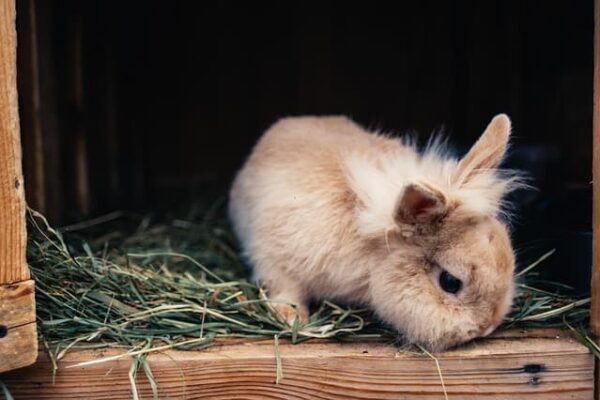
The cage should be spacious so that the rabbit can run, jump, and not feel cramped. The approximate dimensions of a comfortable rabbit hutch are 70-170 cm long and 60 cm wide. If the door is easy to open and the entrance is convenient, your pet will be able to go outside or return home freely when necessary. It is better if the tray is made of plastic, especially if your rabbit is well-fed. Bars and grates under the feet can injure the animal’s paws. Hay or straw can be used as bedding in the cage, and it must be changed daily, as must the litter in the tray.
The feeder and waterer should be made of heavy material. This is necessary to maintain order in the rabbit’s home, as the fluffy animal can knock over light dishes. The ideal option is to use firmly fixed containers for drinking and feeding.
During the day, rabbits usually rest and do not react well to loud noises and noise. These pets are very skittish. Rabbits are afraid of contact with other animals and often with strangers, so try to protect your fluffy friend from unwanted stress. It is best to place their resting area in a calm and quiet part of the room.
The most important conditions for keeping these animals are cleanliness of the cage, mandatory vaccination, and a properly selected diet. If all of this is in order, your fluffy friend will live a long and happy life.
What difficulties do owners of decorative rabbits face?
Now let’s talk about what might confuse a future owner of a decorative domestic rabbit.
Fluffy pets become more active at night. Therefore, you need to think about how to keep your rabbit occupied during the dark hours. Don’t be surprised if your pet becomes more active in the evening. It is advisable to put fresh hay and toys in the cage beforehand so that it has something to keep itself occupied while you are still asleep.
- Rabbits have a highly developed sense of smell and cannot tolerate strong odors (smoke, perfume, the smell of other animals, etc.).
- These pets have a very sensitive digestive system, so be prepared for occasional digestive problems. However, if you prepare the right diet, you can avoid such problems.
- Danger in the apartment. When letting your fluffy friend run around the house, remember that they often die or get injured. They can be accidentally stepped on, caught in a door, or electrocuted if they try to chew through wires. Take care of safety in advance.
What are the most common diseases in domestic rabbits?
Domestic rabbits are beautiful animals, but they are quite fragile. Their health must be protected. For this reason, not everyone is willing to take on the responsibility of bringing one of these little creatures into their home. Nevertheless, a decorative rabbit is an excellent companion for children and adults. This little fluffy ball of happiness can give you a sea of warm emotions. We will tell you how to properly care for your pet so that it is always healthy and lives a happy rabbit life in your home.
Warning signs that your pet is sick:
- difficulty breathing, wheezing, sneezing, moaning;
- general physical condition – lethargic and apathetic;
- refusal to eat;
- diarrhea;
- discharge from the nose, ears, or eyes;
- increased temperature.
Diseases that pet rabbits are prone to can be classified as:
- infectious;
- non-infectious;
- caused by parasites (fleas, ticks, fungi, worms, coccidia);
- caused by improper feeding.
The most dangerous diseases for fluffy pets are myxomatosis and viral hemorrhagic disease of rabbits (VHD). These are fatal diseases, so veterinarians strongly recommend vaccinating animals on time to save their lives.
Myxomatosis is an infectious disease. It is acute, most often occurring during the warm season, accompanied by serous-purulent conjunctivitis, tumorous nodules on the skin, and edematous-gelatinous infiltration of the tissue in the head and genital areas. The mortality rate for myxomatosis in rabbits reaches 90-100%. A pet can become ill through contact with a carrier of the disease via care items or parasite bites. Unfortunately, myxomatosis is incurable.
Viral hemorrhagic disease of rabbits (VHD) is an acute infectious disease that affects the internal organs, primarily the liver and lungs. Symptoms appear unexpectedly or are not recognized at all, the disease progresses rapidly, and death occurs rapidly in 80-100% of cases. Pets can become infected through food, water, bedding, or respiratory transmission if a carrier of the infection lives nearby. The disease is sometimes accompanied by diarrhea, a temperature rise to 40-42°C, conjunctivitis, a runny nose and sneezing, and difficulty breathing, but often has no noticeable symptoms at all. VHBK cannot be treated, but if it is detected in time (which is extremely difficult), it is possible to try to save the rabbit with a special antiviral serum.